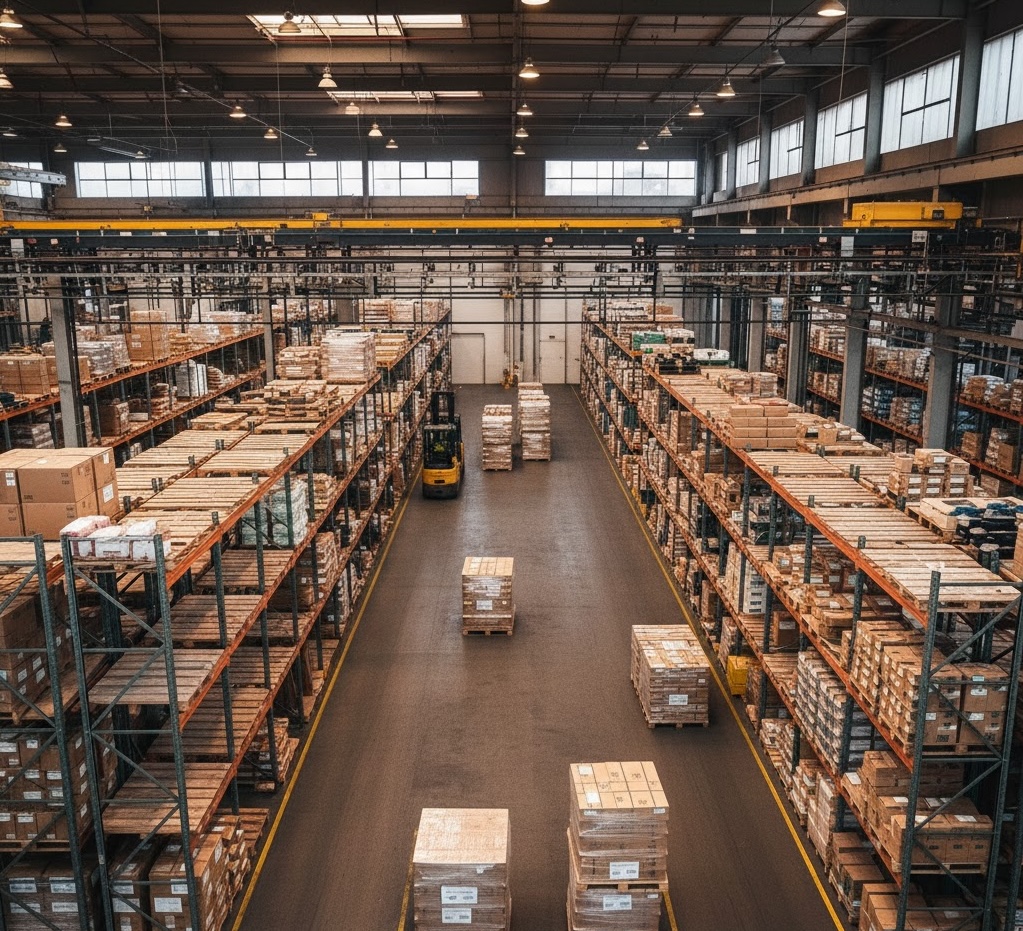
Block pallets feature true 4-way forklift entry. Used block pallets can be requested through partner suppliers; availability varies.
How It Works
Send one request and a partner supplier in our network follows up with a quote.
Pickup & Delivery
Through partner suppliers
Grades A, B, C
Pick what fits the job
Buy & Sell
Surplus pallets welcome
Reuse First
Keeps usable pallets in service
Used Pallets: Often a practical alternative to new. Pricing is by quote from partner suppliers.
Get a Free Quote
A partner supplier will follow up.
Block vs. Stringer Pallets
Block Pallets
True 4-way entry on all sides
Often used with automated handling; confirm fit
Deck supported by blocks, not stringers
Commonly used with racking; confirm fit
Stringer Pallets
2-way, or partial 4-way entry
Forks enter at the notches or between stringers
Often simpler in construction
Common in North America
Block Pallet Advantages
Versatility
Access from all four sides
Construction
Blocks support the deck instead of stringers
Handling
Check fit with your handling equipment
Racking
Check fit with your racking supplier
Common Sizes
Size
Construction
Entry
Availability
48" x 40"
Block
4-way
Varies by supplier
48" x 48"
Block
4-way
Varies by supplier
42" x 42"
Block
4-way
Varies by supplier
Custom
Block
4-way
Built by partner suppliers on request
Common Applications
Automated Handling
Automated systems depend on consistent pallets, so check dimensions and condition with the supplier
Racking
Confirm pallet size and construction with your racking supplier before ordering
Heat-Treated Shipments
Heat-treated, stamped block pallets can be requested; confirm the stamp and destination rules
Block Pallets Guide
Used Block Pallets and Reuse
Reusing a pallet avoids building a new one, and used block pallets can be requested through partner suppliers. Condition varies by supplier and by pallet, so ask about repairs and wear. Worn pallets can often be repaired or recycled into wood products.
Block Construction Explained
Block pallets use wooden blocks instead of stringers to support the deck. This creates openings on all four sides for forklift entry. Blocks can be solid wood, engineered wood or recycled content, so ask the supplier what a given pallet is made from.
Block Pallets and Automated Handling
Automated systems depend on consistent pallet dimensions and condition. True 4-way entry allows handling from any side. If you use conveyors or automated storage, check pallet requirements with your equipment supplier and tell the partner supplier what you need.
Load and Racking Questions
Load ratings depend on pallet design, wood and condition, and used pallets may differ from new ones. Ask the supplier about construction and repairs, and check the pallet against your load and your racking requirements before you order.
Block Pallet Pricing
Pricing is by quote from partner suppliers and depends on size, condition, quantity and treatment. Used pallets are often a lower-cost option than new. Describe the construction and condition you need in the quote request so quotes are comparable.
Repair and Inspection
Individual blocks and deck boards can often be replaced, and used pallets are commonly repaired before they are resold. Inspect pallets for loose boards, damaged blocks and protruding nails before use, and set aside any that are damaged.
Switching From Stringer to Block
Before switching from stringer to block pallets, review equipment compatibility. Most forklifts handle both types, but racking and automated systems may have specific requirements. Consider trying a small quantity first to see how it works in your operation.
Block Pallet Standards
Block designs are common internationally, while the 48x40 GMA size in North America is commonly built with stringers. ISPM 15 heat treatment, a core temperature of 56 °C for 30 minutes with an HT stamp, applies to block and stringer pallets alike. Check current regulations and destination rules.
Order Block Pallets
Request a quote. Pricing and availability come from partner suppliers.
Block pallets use blocks instead of stringers, which allows entry on all four sides. They are commonly chosen where forklifts or pallet jacks approach from any side and for automated handling.
Do block pallets allow four-way entry?
Block pallets typically allow forklift entry on all four sides, while stringer pallets are typically two-way unless notched.
What sizes are available?
48x40 is the common GMA size. Other footprints can be requested through partner suppliers; availability varies.
Are block pallets stronger than stringer pallets?
Neither design is stronger in every case. Strength depends on the lumber, the build and the condition, so ask the supplier for the spec.
Can block pallets be used in racking?
It depends on the pallet build and your rack. Give the supplier your rack details and ask what suits them.
Are used block pallets available?
Used and new block pallets may be available through partner suppliers; availability varies.
Can block pallets be heat treated?
Heat-treated, stamped pallets can be requested through partner suppliers. Confirm the stamp and any destination rules before shipping.
Can worn block pallets be repaired?
Worn pallets can often be repaired. Ask the partner supplier what repairs they handle.